Plymouth Whale Watching
Tours & tickets

Hand-picked by our editors — only the best 5 experiences from 12 reviewed.

Open today 08:00–18:00
Attendance: Moderate — summer season
Morning arrivals are recommended for calmer seas and better visibility.
Free cancellation Instant confirmation Mobile voucher Verified partner Book now, pay later
Tickets

Choose your ticket

Verified partners for every tour, free cancellation where available, and instant confirmation on every booking.

Presidential History & Plymouth: Full-Day Coastal Tour from Boston 11 hr
Guided Experience

Presidential History & Plymouth: Full-Day Coastal Tour from Boston

4.8 (112)
€143
per person
Instant Mobile voucher Flexible — change up to 24h

Discover presidential birthplaces, historic lighthouses, and Plymouth Rock on a guided coastal journey

Reserve
Plimoth Patuxet Museums: Living History Experience 4 hr
Standard Entry

Plimoth Patuxet Museums: Living History Experience

4.5 (176)
€30
per person
Instant Mobile voucher Flexible — change up to 24h

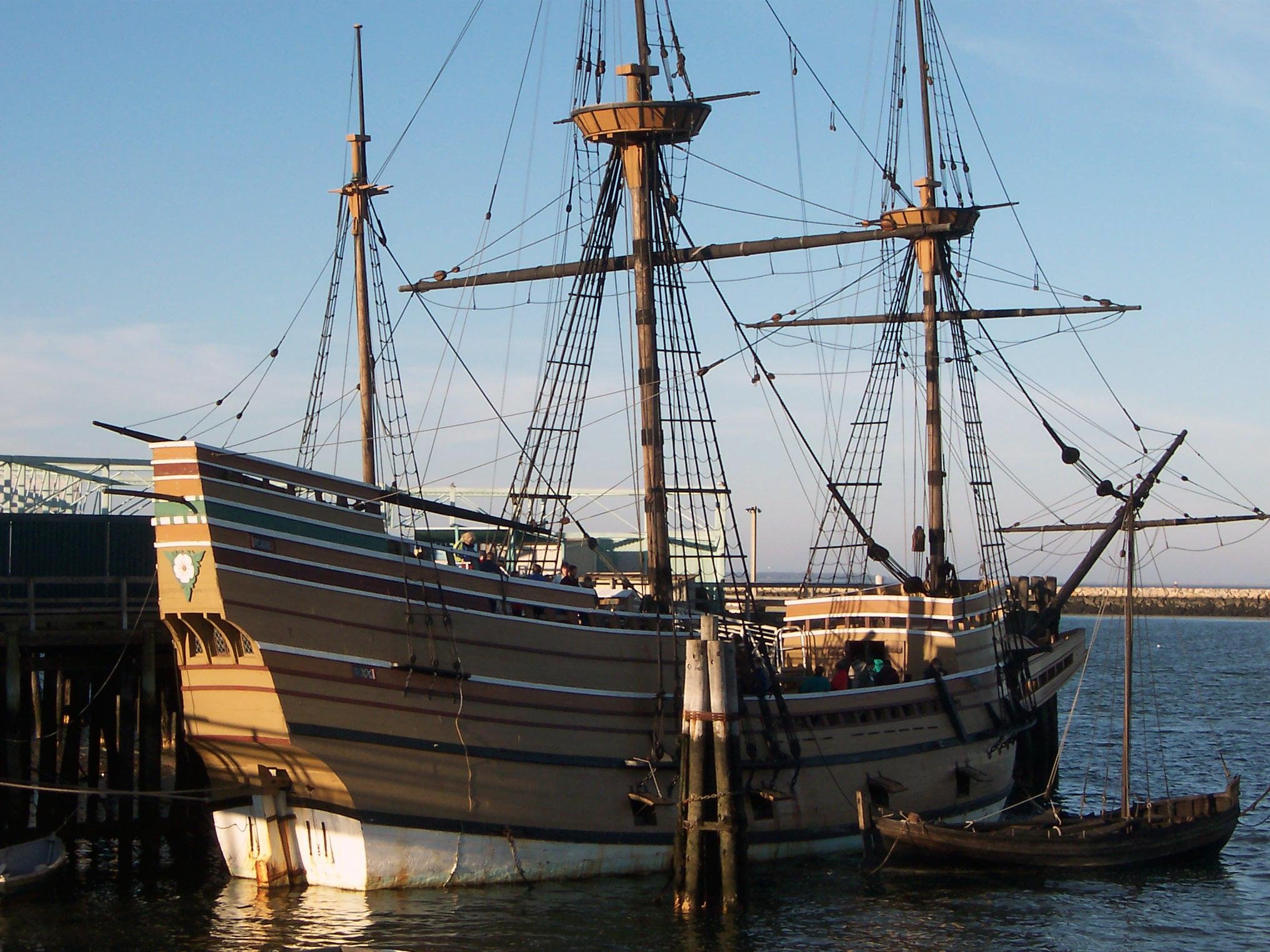
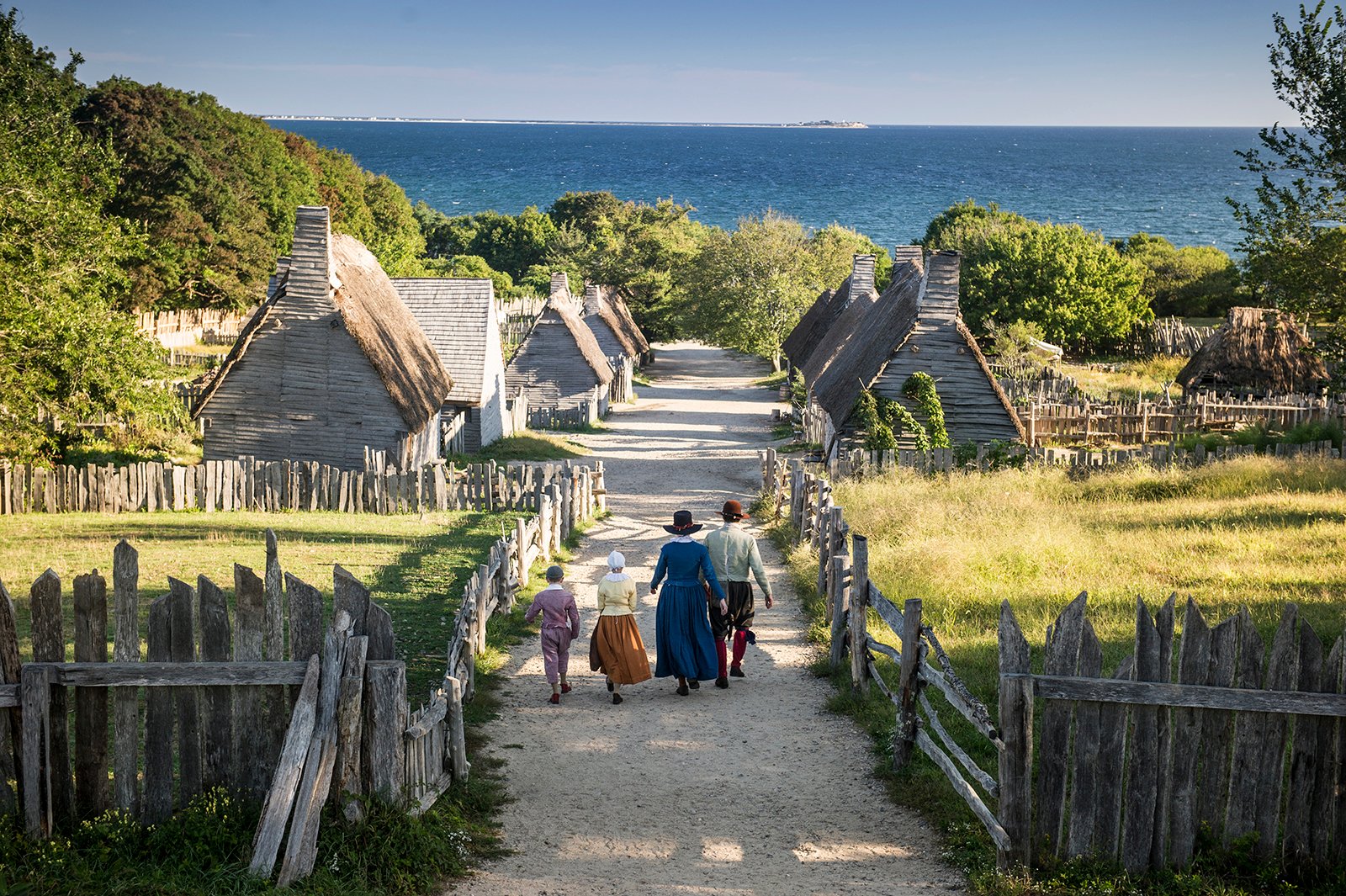
Explore 17th-century colonial life, Indigenous heritage, and the iconic Mayflower II replica

Reserve

Prices from verified partners. Availability updates in real time at checkout. Free cancellation policies apply where shown.

Highlights

What you'll see inside the attraction

The landmarks, rooms, and views travelers on this tour remember — all visible on a single visit.

Cape Cod Bay

A vital transit route for marine mammals, this bay provides calm waters for your approach to the sanctuary.

Head to head

Plymouth Whale Watching Cruise vs. Boston Whale Watching Cruises — Which Departure Point Is Better?

They complement each other; most visitors who do both call the Plymouth departures more efficient due to direct access to Stellwagen Bank. Securing plymouth whale watching cruise tickets offers a more intimate journey toward the marine sanctuary compared to the urban harbor exit of Boston.

Feature Top pick Plymouth Cruises Boston Cruises
Departure Convenience
Central Boston harbor access
Travel Time to Stellwagen Bank
Longer transit through harbor
Cost of Tickets
$68–$80 (summer)
Crowd Density
High passenger volume
Available Amenities
Onboard galley and bar
Marine Sanctuary Proximity
Requires harbor transit

Verdict: Choose a plymouth whale watching cruise tour for proximity to the whales, or select Boston if you prioritize integration with other city sightseeing plymouth whale watching cruise tours.

How your ticket works

Book your ticket in 3 steps

  1. 01

    Book online

    Choose your ticket, select your date, and reserve in under two minutes. Secure checkout handled by our verified partner.

  2. 02

    Receive your mobile voucher

    Instant confirmation by email, with a mobile voucher you can save offline. No printing, no queuing at a collection desk.

  3. 03

    Show & enter

    Arrive at the entrance, show your voucher on your phone, and walk in. Most tickets include priority or skip-the-line access.

Plan your visit

Everything you need to know before you go

Practical details for your visit straight from our verified partners — hours, access, rules, and how to get there.

Open today · 08:00–18:00
Opening hours
08:00–18:00 daily
Address
10 Town Wharf, Plymouth, MA 02360, USA
Accessibility
Inquire for specific vessel needs
Best arrival window
08:00–12:00
Storage
Not available on board
Stellwagen Bank
National Marine Sanctuary
Mon
08:00–18:00
Tue
08:00–18:00
Wed
08:00–18:00
Thu
08:00–18:00
Fri
08:00–18:00
Sat
08:00–18:00
Sun
08:00–18:00
Location

Address
10 Town Wharf, Plymouth, MA 02360, USA
Storage
Not available on board
Stellwagen Bank
National Marine Sanctuary

Dress code

Wear warm, layered clothing as temperatures on the water are typically 10 to 15 degrees cooler than on land. Windbreakers and comfortable, non-slip footwear are recommended for a plymouth whale watching cruise.

Bags & security

Keep personal items secure and limited to what you can carry, as there is no storage for large luggage. Follow all crew instructions during the plymouth whale watching cruise.

Photography

Photography is encouraged, but ensure you have protective gear for your equipment against salt spray. Capturing a plymouth whale watching cruise requires quick focus for wildlife action.

Accessibility

Vessels vary in accessibility features; contact the operator directly to discuss mobility aid requirements for your plymouth whale watching cruise. Staff can often assist with boarding.

What to bring

  • Sunblock
  • Sunglasses
  • Camera
  • Binoculars
  • Layered clothing
  • Cash for galley purchases
  • Hat

Not allowed

  • Weapons
  • Illegal substances
  • Glass containers
  • Double-wide strollers
  • Unsecured drones
  • Large coolers
  • Laser pointers
  • Fireworks
  • Professional filming equipment without permit

Families & strollers

A plymouth whale watching cruise is suitable for families, with infants and children requiring adult accompaniment at all times. Marine biologists are often on board to engage younger guests.

Food & drink

Full galley service is available on most vessels during a plymouth whale watching cruise. Alcoholic beverages may be available for purchase on board.

Around your visit

Everything else worth knowing

Best time to go, insider tips, nearby landmarks, and the cancellation fine print — flip through to skim what matters to you.

Cancellation policy

Flexible, no hidden fees.

Check your confirmation email for specific tour operator cancellation terms. Note that Stellwagen Bank National Marine Sanctuary entry is 0 USD.

About

The place, in context

Stellwagen Bank National Marine Sanctuary spans 842 square miles of Atlantic seafloor between Cape Cod and Cape Ann, and its nutrient-rich upwellings support one of the Western Hemisphere's densest concentrations of humpback whales. The sanctuary was designated in 1992, protecting not only cetaceans but also commercial fish stocks, shipwrecks from three centuries of maritime trade, and the Cold War submarine routes that once threaded these channels. Plymouth sits at the southern threshold of this biodiverse zone, thirty nautical miles closer to the feeding grounds than Boston, which translates to shorter transits and longer observation windows. A Plymouth whale watching cruise typically covers eighteen to twenty-four miles each way, crossing Cape Cod Bay before reaching the sanctuary's western boundary. Humpback whales—identifiable by their knobbly pectoral fins and fluked dives—return to Stellwagen each spring to feed on sand lance, herring, and krill aggregations drawn to the bank's shallow plateaus. Fin whales, the ocean's second-largest species, patrol deeper water along the sanctuary's edges. Minke whales, smaller and more solitary, surface unpredictably near the shoals. Atlantic white-sided dolphins often ride the bow wake during crossings, and harbor seals haul out on the navigational buoys marking the shipping lanes. Sightings vary by season: June through September offers the highest probability of surface-active humpbacks, while late April and early May bring northbound migrants still lean from their Caribbean calving grounds. The whales themselves are catalogued individuals. Since 1979, the Center for Coastal Studies has maintained photographic records of more than 900 humpback whales identified by the unique black-and-white pigmentation on the undersides of their tail flukes. Several animals seen from Plymouth boats—Salt, Wizard, Pele—have been tracked for four decades, their calving intervals and migration routes mapped across the North Atlantic. This longitudinal data set has informed federal policy on ship speed restrictions, fishing gear modifications, and noise pollution thresholds within the sanctuary. Plymouth's working waterfront remains largely intact. Town Wharf, a municipal pier rebuilt in 2003, accommodates both commercial lobster boats and passenger vessels. The departure point sits within sight of Plymouth Rock's granite portico and the replica Mayflower II, but the whale watching tour itself moves quickly past these colonial landmarks, prioritizing open-ocean transit over harbor narration. Naturalists aboard most vessels provide real-time species identification and relay fluke photographs to the regional whale catalog, turning each three-hour crossing into a citizen-science contribution. The sanctuary's designation prohibits intentional approach within 100 yards of any marine mammal, so captains rely on the whales' own curiosity—humpbacks, particularly juveniles, occasionally surface alongside stationary vessels to investigate the hull.

"Since 1979, the Center for Coastal Studies has maintained photographic records of more than 900 humpback whales identified by the unique black-and-white pigmentation on the undersides of their tail flukes."
Your experience

What a tour day looks like

A step-by-step walkthrough of the visit — what you'll see, how long each stage takes, and the details that matter.

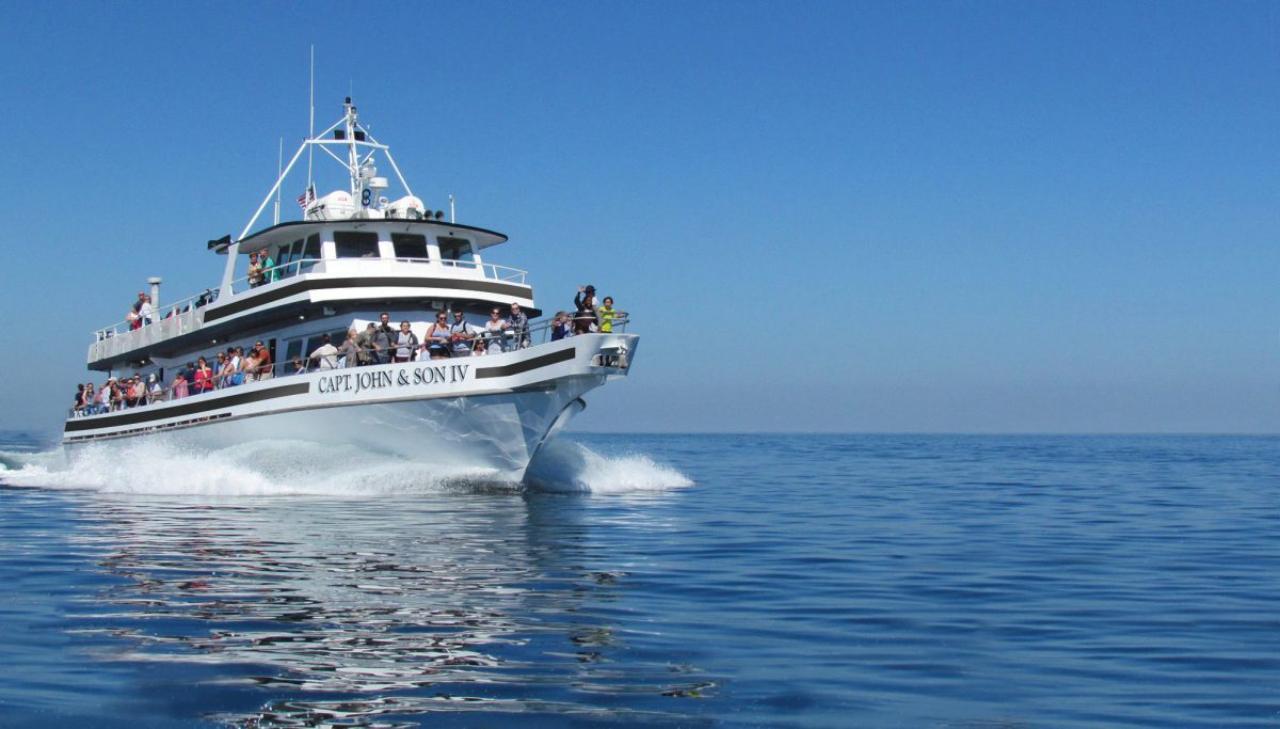
You board at Town Wharf, where the gangway deposits you onto a steel-decked catamaran or single-hull cruiser designed for offshore stability. The vessel clears the inner harbor within minutes, passing the breakwater and accelerating into Cape Cod Bay. The shoreline flattens as you pull away—Plymouth's water tower and the Pilgrim Monument in Provincetown mark opposite horizons. The transit takes forty to fifty minutes, depending on sea state and the naturalist's latest radio check with other boats already on the grounds. When the engine throttles back, you're over Stellwagen Bank. The water changes color here, from gray-green coastal chop to a deeper Atlantic blue. You scan the surface for blows—vertical exhalations that hang in the air for a few seconds before dissipating. The first whale is usually spotted by the crew: a dark hump rolling at the surface, followed by the arched back and, if you're patient, the raised flukes as the animal dives. Humpbacks can stay submerged for eight to twelve minutes. You wait. When the whale resurfaces, often closer than before, you hear the blow—a wet, resonant exhale that carries across flat water. If the whale breaches, the impact sends a plume visible a half-mile away. You photograph the fluke as it rises and slips under, capturing the trailing edge pattern that will later be cross-referenced against the sanctuary catalog. The return crossing begins mid-afternoon, the bow angled back toward Plymouth Light.

Frequently asked

Frequently asked questions about plymouth whale watching cruise tours

What are the opening hours for a plymouth whale watching cruise?

The operator office is open 08:00–18:00 daily.

Is there an entrance fee for the Stellwagen Bank National Marine Sanctuary?

Entrance fee is 0 USD as this is a marine sanctuary, not a park.

When is the best time to arrive for my plymouth whale watching cruise?

We recommend an arrival window of 08:00–12:00 for the best wildlife spotting conditions.

Are children allowed on a plymouth whale watching cruise?

Yes, children are welcome on a plymouth whale watching cruise but must be accompanied by an adult.

What should I bring on my plymouth whale watching cruise tour?

Bring sunscreen, sunglasses, and extra layers for your plymouth whale watching cruise tour.

Can I buy food during the plymouth whale watching cruise?

Yes, full galley service is available on board during most cruises.

What is the address for my plymouth whale watching cruise tickets?

The address is 10 Town Wharf, Plymouth, MA 02360, USA.

Are there nearby attractions to visit after my plymouth whale watching cruise?

Yes, the Mayflower II and Plymouth Rock are located nearby for visitors using plymouth whale watching cruise tickets.

What species can I see on a plymouth whale watching cruise?

You may spot humpback, finback, minke, pilot, and the endangered right whales during your trip.