
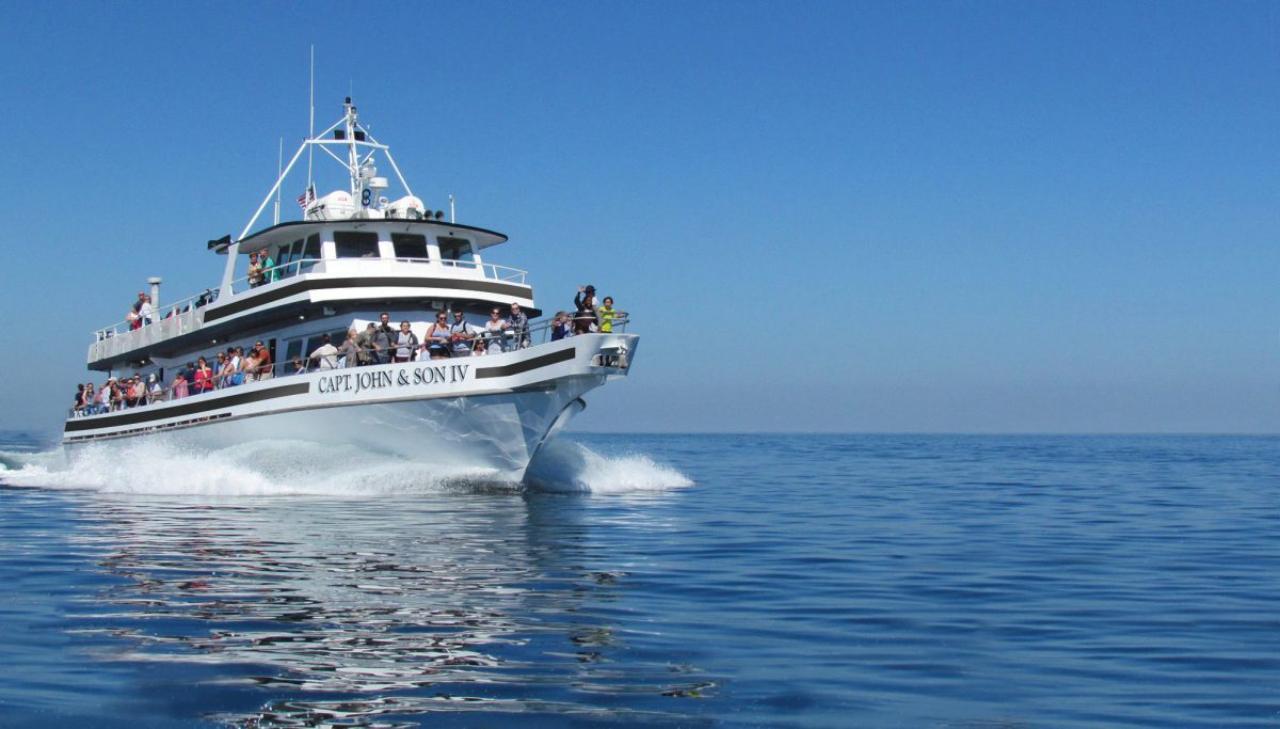
4 hr
Cape Cod Whale Watching Expedition
Witness humpbacks, finbacks, and endangered right whales in their natural feeding grounds off Plymouth
Reserve

Hand-picked by our editors — only the best 5 marine experiences from 23 reviewed
Verified partners for every tour, free cancellation where available, and instant confirmation on every booking.
4 hr
Witness humpbacks, finbacks, and endangered right whales in their natural feeding grounds off Plymouth
Reserve
11 hr
Discover presidential heritage, coastal New England charm, and the founding story of Plymouth in one day
Reserve
3 hr
Explore three centuries-old sites where Indigenous culture and colonial settlement come alive
ReservePrices from verified partners. Availability updates in real time at checkout. Free cancellation policies apply where shown.
The landmarks, rooms, and views travelers on this tour remember — all visible on a single visit.
This underwater plateau serves as a primary feeding ground for endangered whale species within the sanctuary. It was formed by glacial deposits during the last ice age
The deep canyons surrounding the bank create critical nutrient upwellings that sustain the local marine food web. These areas reach depths that support unique deep-water ecosystems
The sanctuary is home to numerous historic shipwrecks, including passenger steamships and fishing vessels. These sites are protected, and vessels are requested to maintain a distance of 400 feet
Located to the north, this area is a secondary sanctuary hotspot known for high biodiversity. It is frequently visited by migrating marine mammals seeking rich foraging grounds
These waters are one of the most important protective zones for the rare North Atlantic right whale. Protection efforts here are central to the sanctuary's mission
Provincetown provides significantly faster access to the sanctuary due to its northern proximity, while choosing plymouth whale watching tours offers a more relaxed harbor experience with deeper historical context for your marine excursion.
| Feature | Top pick Plymouth Tours | Provincetown Departures |
|---|---|---|
Travel Distance to Sanctuary |
1.5–2 hours | 15–30 minutes |
Departure Port Atmosphere |
Historic maritime village | Busy tourist hub |
Vessel Size |
Large high-speed catamarans | Varied cruiser fleet |
Accessibility |
Public parking available | Walking distance for pedestrians |
Typical Sightings |
Humpback and Fin whales | Humpback and Minke whales |
Cost of plymouth whale watching tours tickets |
60–80 USD (summer) | 55–75 USD (summer) |
| See tickets → |
Verdict: Select the Provincetown whale watching departures tour if minimizing travel time is your priority, or choose the plymouth whale watching tours tours if you prefer combining your marine observation with a scenic coastal walk.
Choose your ticket, select your date, and reserve in under two minutes. Secure checkout handled by our verified partner.
Instant confirmation by email, with a mobile voucher you can save offline. No printing, no queuing at a collection desk.
Arrive at the entrance, show your voucher on your phone, and walk in. Most tickets include priority or skip-the-line access.
Practical details for your visit straight from our verified partners — hours, access, rules, and how to get there.
Wear multiple layers, including a windproof jacket, as temperatures on the water are often cooler than on land. Non-slip, flat-soled shoes are strongly recommended for safety aboard your plymouth whale watching tours vessel.
Keep bags compact and secure to avoid tripping hazards on deck. Security screenings may be conducted by individual tour operators prior to boarding for your plymouth whale watching tours.
Bring a camera with a zoom lens to capture marine wildlife from a distance. Respect federal distance guidelines to ensure the safety of the animals during your plymouth whale watching tours.
Vessels vary in accessibility; confirm with your operator regarding mobility device accommodations before booking plymouth whale watching tours tickets. The sanctuary itself is a natural, open-ocean environment.
Children are welcome on most vessels, though youth-sized life jackets may be required by local law. Educational components of plymouth whale watching tours make it an ideal outing for curious young marine life enthusiasts.
Most operators provide a galley with snacks and beverages for purchase during plymouth whale watching tours. Carry-on food is typically allowed, but be sure to dispose of all waste properly to protect the sanctuary.
Best time to go, insider tips, nearby landmarks, and the cancellation fine print — flip through to skim what matters to you.
Flexible, no hidden fees.
Reservations for plymouth whale watching tours require 24-hour notice for full refunds. Fees are 0 USD for sanctuary entry.
Stellwagen Bank National Marine Sanctuary protects 842 square miles of open Atlantic where the continental shelf drops from 100 to 600 feet in less than a mile. That abrupt bathymetry pulls cold, nutrient-rich water to the surface, seeding dense clouds of krill and sand lance that draw humpback, finback, and minke whales between April and October. The sanctuary was designated in 1992 after decades of commercial pressure threatened the bank's productivity, and today it hosts one of the most reliable cetacean aggregations in the western North Atlantic. Federal protection prohibits trawling within the core feeding zone, allowing fish stocks to rebuild and sustaining the food web that makes Plymouth whale watching tours viable year after year. Plymouth Harbor lies eighteen nautical miles west of the bank's nearest boundary, placing it closer than Boston or Provincetown to the sanctuary's southern feeding grounds. Morning departures from State Pier reach the outer bank in under ninety minutes, arriving as humpbacks begin their daytime surface feeding. The whales employ bubble-net feeding, a coordinated behavior in which one whale circles below a school of sand lance while exhaling a spiral of bubbles that traps the fish. The group then surges upward through the column, mouths open, breaching in unison. Naturalists aboard Plymouth vessels catalog individual whales by the unique pigmentation patterns on their tail flukes, contributing sighting data to the Gulf of Maine Humpback Whale Catalog maintained by the College of the Atlantic. Over 900 individuals have been identified in Stellwagen waters since the catalog began in 1979, and repeat sightings confirm that many whales return to the same sector each season. Finback whales, the second-largest species on Earth, patrol deeper water along the bank's eastern rim. They are faster and less acrobatic than humpbacks, often visible only as a dorsal fin slicing the surface before a shallow dive. Minke whales, the smallest baleen species in these waters, appear sporadically inshore during summer, identifiable by the white band across each pectoral flipper. The sanctuary also supports harbor porpoise, Atlantic white-sided dolphin, and occasional North Atlantic right whales, though the latter are critically endangered and sightings are rare. Weather permitting, naturalists deploy hydrophones to capture the low-frequency pulses of finback song and the complex, evolving refrains humpbacks produce during mating season. Those vocalizations carry for miles underwater, and listening to them live offers a reminder that most of what happens in the sanctuary remains invisible from the surface.
"Over 900 individual humpbacks have been cataloged in Stellwagen waters since 1979, many returning to the same feeding sector each season."
A step-by-step walkthrough of the visit — what you'll see, how long each stage takes, and the details that matter.
You board at State Pier in Plymouth Harbor as the 8:00 a.m. departure window opens, stepping onto a stabilized catamaran fitted with three observation decks and a heated cabin. The vessel clears the harbor breakwater and turns southeast, passing Gurnet Light and the long sandspit that shelters Duxbury Bay. Within twenty minutes the coastline fades to a low smudge and the captain throttles up, pushing toward the sanctuary boundary at twenty knots. A naturalist circulates with a laminated fluke chart, explaining how to distinguish returning whales from first-time visitors. Ninety minutes out the engines cut to idle. A crew member points to a plume of mist two hundred yards off the starboard bow, and seconds later a humpback surfaces, exhales, and rolls forward in a shallow dive. The dorsal fin appears last, followed by the tail flukes rising vertically before the whale descends. The naturalist photographs the underside and matches the black-and-white pattern to a catalog entry: a female known as Pivot, first identified in 1985. She surfaces twice more, then breaches completely, twisting mid-air before crashing back in a cascade of white water. You remain on station for thirty minutes as the pod moves east, then the captain repositions to intercept a finback traveling along the bank's drop-off, its sleek back visible just below the waterline before it accelerates and disappears.
The sanctuary is accessible 00:00–23:59, though vessels adhere to specific departure schedules. Most plymouth whale watching tours operate their main departures during daylight hours.
Entry to the sanctuary is 0 USD, though you must pay for a seat on a commercial vessel to reach the site. Prices for plymouth whale watching tours tickets are set by individual operators.
Accessibility varies by vessel; please contact your specific plymouth whale watching tours operator to ensure your needs are met before booking.
Bring layers, sun protection, and non-slip shoes for your plymouth whale watching tours tour. We recommend arriving during the 08:00–12:00 window for optimal conditions.
Cameras are encouraged on all plymouth whale watching tours to document the marine life. Use a telephoto lens to respect the animals' space from the sanctuary vessels.
The peak season for plymouth whale watching tours is May through October. We recommend booking in advance to secure your spot during these high-demand months.
Most operators on plymouth whale watching tours allow outside food, but please ensure all trash is contained. Do not discard anything into the sanctuary waters.
In the event of severe weather impacting plymouth whale watching tours, operators usually provide vouchers or reschedule your trip. Check with your provider for their specific policy.
Most standard plymouth whale watching tours last between 3 to 4 hours. This allows sufficient time to travel from Plymouth into the heart of the sanctuary.